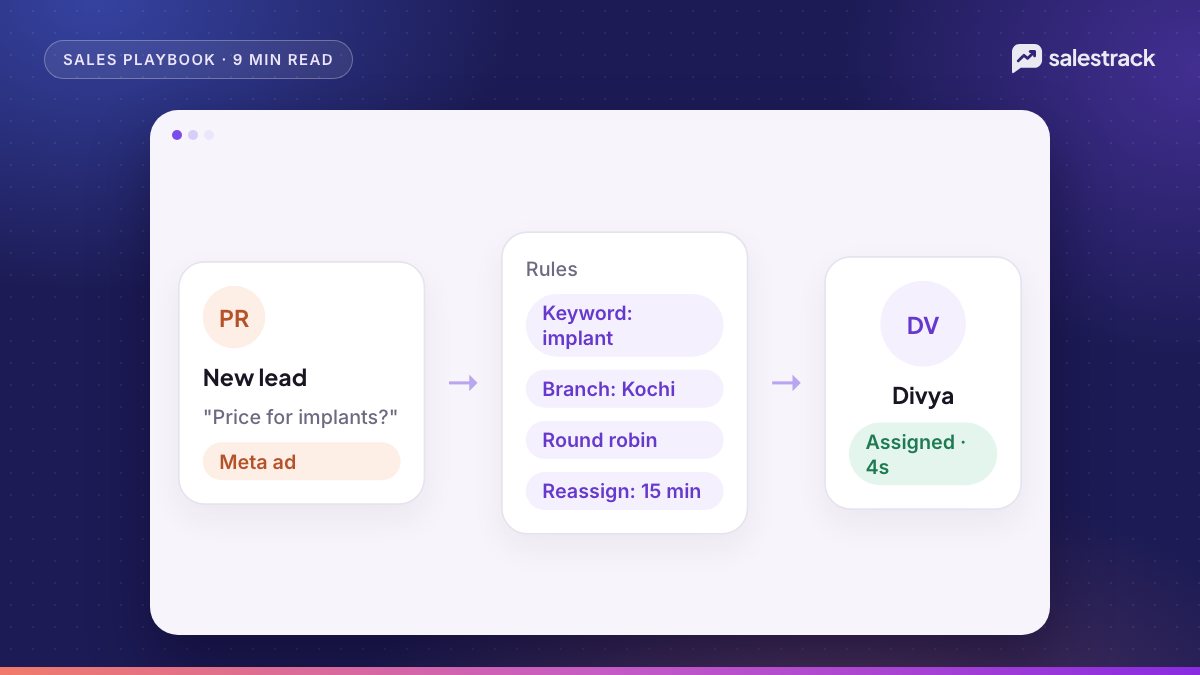
Lead assignment rules decide who owns each new lead the moment it arrives. Good lead routing checks a few things in order (which campaign or ad the lead came from, what they wrote, which branch or language they need) and gives the lead to one named person, with round robin or workload limits to share the rest fairly. A fallback rule reassigns any lead that is not contacted within a set time.
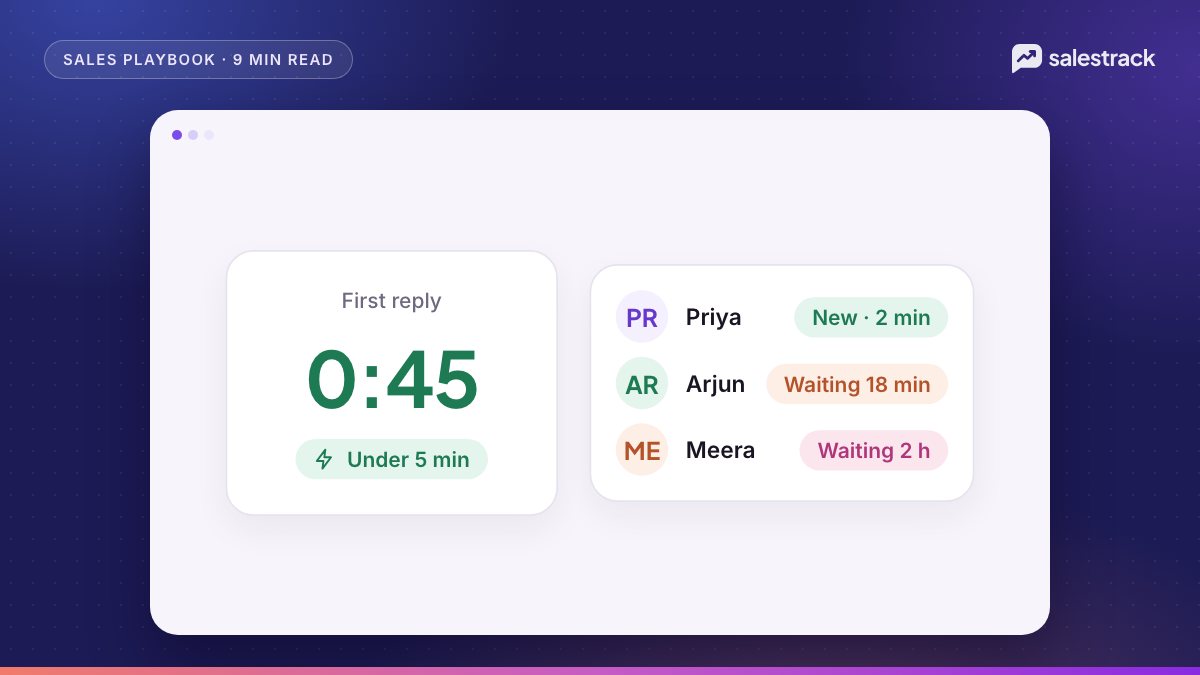
Set up well, rules remove the slowest step in most small sales teams: someone checking a phone or a spreadsheet and forwarding leads by hand. That matters because response time drives results. The 2011 Harvard Business Review study of 1.25 million leads found that firms contacting a lead within an hour were nearly seven times as likely to qualify it as firms that waited an hour longer.
This guide covers each routing method, how to combine them, how to keep it fair, and example rule sets for clinics, real estate, education and travel.
Why lead routing matters
When leads are not assigned, three things happen. Leads sit unowned because everyone assumes someone else will reply. Two people call the same lead. And the best salesperson ends up with the most leads, while others sit idle, until the best salesperson is overloaded and response times collapse.
The HBR audit of 2,241 US companies found 23% never responded to a test web lead at all. Unowned leads are usually how that happens. Clear routing gives every lead an owner and a clock, which is the foundation of speed to lead.
Lead assignment methods compared
Most teams use a mix of these methods. The table shows when each one fits.
| Method | How it works | Best for | Watch out for |
|---|---|---|---|
| Round robin | Next available person gets the next lead | Teams selling one product with similar skill | Ignores how busy each person already is |
| Source or campaign | Lead goes to a team based on the ad, campaign or form | Different products, projects or branches per campaign | Needs a clear ad naming convention |
| Keyword | Words in the first message or form answers decide the team | Click-to-WhatsApp chats and open questions | Misspellings and mixed languages |
| Branch or location | Lead goes to the branch nearest them or named in the ad | Multi-branch clinics, institutes, dealers | Leads that name no location |
| Language | Lead goes to someone who speaks their language | Gulf teams (Arabic/English), regional India | Too few speakers of one language |
| Workload (capacity) | Lead goes to whoever has the fewest open leads, up to a cap | Mixed full-time and part-time teams | Rewards people who close leads lazily |
| Returning lead | Repeat enquiry goes back to the previous owner | Everyone | Previous owner may have left |
Where the routing data comes from
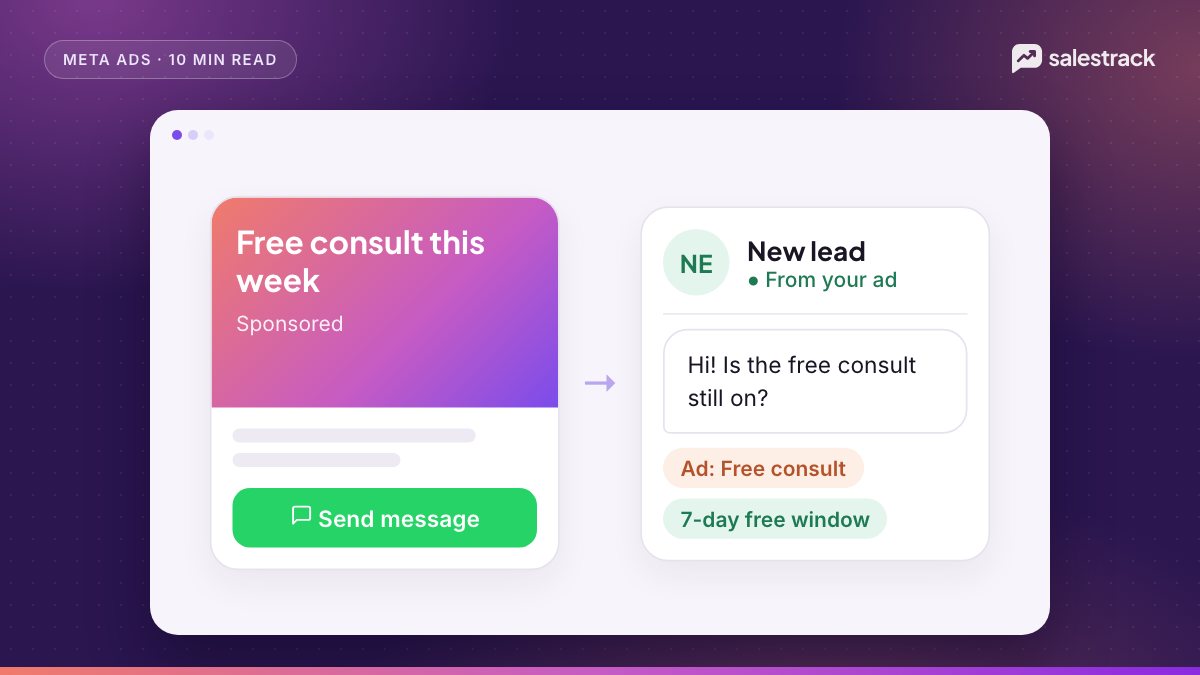
Rules are only as good as the data on the lead. Meta lead form leads carry identifiers you can route on: Meta's lead ads documentation lists the form ID and ad ID among the fields you can read with each lead. For Click-to-WhatsApp chats, the incoming message includes a referral object with the ad ID and ad URL. Your CRM can look up the campaign and ad names from those IDs, so name your campaigns and ads consistently, for example "KOCHI | Implants | Lead form".
How to order lead assignment rules
Rules should run top to bottom, and the first rule that matches decides the owner. A sensible order is:
- Returning lead. If this phone number already has an open lead or a recent owner, send it back to that person.
- Hard specialist rules. Product or service keywords that only one team can handle ("implant", "visa", "NEET").
- Campaign or project rules. The ad or campaign name decides the team ("Palm Grove" ads go to the Palm Grove team).
- Branch and language rules. Location in the ad name or form, or Arabic text in the first message.
- Catch-all. Everything else goes into a round robin or capacity pool for the general team. Never leave a lead with no matching rule.
Within each team, round robin or capacity decides the individual person. Review the rules whenever you launch a new campaign; a new ad name that matches no rule silently falls to the catch-all.
Workload caps, availability and fairness
Fair distribution keeps the team motivated and keeps response times steady. Three settings do most of the work.
- Availability. People on leave, in a meeting or off shift should stop receiving new leads. Let them switch themselves to unavailable rather than relying on the manager to remember.
- Caps. Set a maximum number of open, untouched leads per person, for example 15 new leads awaiting first contact. Above the cap, new leads skip that person.
- Weighting. A part-timer might get half as many leads as a full-timer. A new joiner might get fewer high-value campaign leads for the first month.
Check fairness monthly: leads received, contact rate and conversion per person. If one person receives the same number of leads but converts half as many, coach them or reduce their share of the expensive campaigns. Our sales reports and KPIs guide shows a simple leaderboard for this.
Fallback and reassignment SLAs
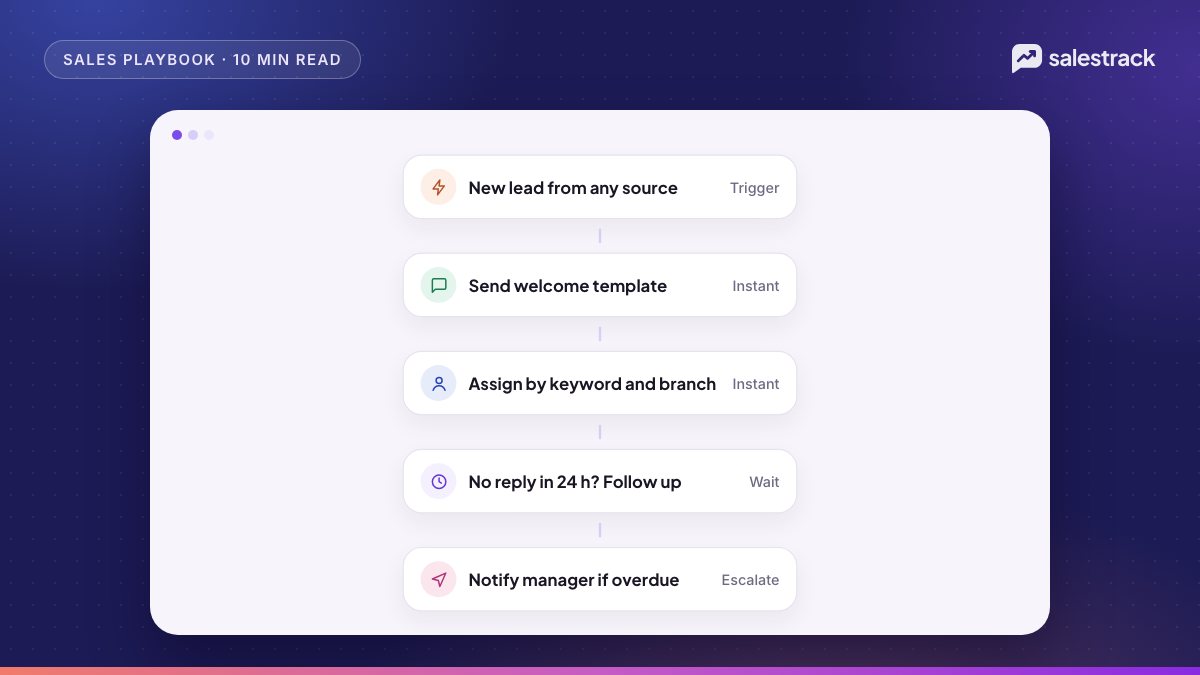
An assignment without a deadline is just a suggestion. Add a reassignment rule: if the owner has not contacted the lead within a set time, the lead moves to the next available person and the manager is notified.
| Lead type | Suggested first-contact deadline | What happens on breach |
|---|---|---|
| Paid ad leads, office hours | 10–15 minutes | Reassign to next in pool, alert manager |
| Website and organic leads | 30 minutes | Reassign, alert manager |
| After-hours leads | Within the first 30 minutes of opening | Reassign and flag in the morning report |
| Second reassignment | Same deadline again | Assign to the team lead directly |
Decide what "contacted" means: a sent WhatsApp message, a connected call, or either. An automatic reply should not count, or the timer is meaningless. Make the timer respect office hours so leads are not bounced around at 2 am.
Lead routing examples by industry
These rule sets are illustrations; adapt the names and timers to your business.
Dental or aesthetic clinic, three branches
- Returning patient goes to the previous coordinator.
- "Implant" or "All-on-4" in the message or form goes to the implants coordinator.
- "Braces" or "aligner" goes to the orthodontics desk.
- Ad name contains a branch name: goes to that branch's front desk round robin.
- Everything else: central call team, capacity-based. Reassign after 15 minutes.
Real estate developer or broker
- Ad or campaign name contains the project name: project team round robin.
- "Villa" or a budget answer above a set amount goes to senior sales managers.
- NRI or Gulf phone codes go to the NRI desk, with timers adjusted for time zones.
- Everything else: general pool. Reassign after 15 minutes; second breach goes to the sales head.
Coaching institute or university admissions
- "NEET" goes to medical counsellors; "JEE" to engineering counsellors.
- Form answer "centre" decides the branch.
- Parent and student enquiries from the same number merge and go to one counsellor.
- Capacity cap of 25 open new leads per counsellor during admission season.
Travel agency in the Gulf
- Arabic text in the first message goes to Arabic-speaking agents; others to English speakers.
- "Visa" goes to the visa desk; "Umrah" to the religious travel team.
- Campaign name decides the destination team (Europe, Far East, domestic).
- Everything else: round robin. Weekend shift handles leads on the local weekend days.
Lead assignment in salestrack
salestrack's lead assignment runs rules top to bottom as each lead arrives, matching on the first message, form fields, ad, campaign or branch, and assigning to a person, a team or a round robin. Capacity mode sends more leads to people with fewer open leads, staff can switch themselves to unavailable, returning leads go back to their previous owner, and a reassign timer moves untouched leads on and alerts the manager. The same rules apply to Click-to-WhatsApp chats and lead form leads. Basic assignment is on the free plan; keyword rules, capacity and reassign timers are on Starter and Growth. See team and branches for scorecards and branch access.
FAQ
What are lead assignment rules?
Lead assignment rules decide who owns a new lead the moment it arrives, based on things like the campaign, the first message, the branch, the language or each person's workload. They run automatically, so no lead waits for someone to forward it.
What is round robin lead distribution?
Round robin gives each available team member the next new lead in turn, so leads are shared evenly. It works best when everyone on the team sells the same thing equally well.
Should leads be assigned by workload or round robin?
Use round robin when lead quality and salesperson skill are similar. Use workload (capacity) when some people have many open leads or work part-time, so new leads go to whoever has room.
How long should a salesperson have before a lead is reassigned?
For leads from ads, 10 to 15 minutes during office hours is a common setting. Longer than an hour defeats the purpose of fast response.
What happens to leads that arrive outside office hours?
Send an automatic reply with a next step, then either assign them at once with the timer paused until morning, or hold them in a queue that is assigned when the team starts.
Sources
Facts in this article were checked against these sources on 1 November 2026. WhatsApp and Meta change their rules and prices often, so check the source before you rely on a number.
- The Short Life of Online Sales Leads — Harvard Business Review, March 2011
- Are you letting online leads go cold? — SmartCompany summary of the HBR study figures (2011)
- Retrieving leads (Lead Ads) — Meta for Developers
- Messages webhook reference: referral object for Click to WhatsApp ads — Meta for Developers